Maize (Zea mays)
A foundational cereal grain originally domesticated from wild teosinte grass in Mesoamerica, now serving as a global cornerstone for human sustenance and agricultural economies.
Historical Overview
The Evolutionary Anomaly: From Teosinte to Zea mays
In the pantheon of domesticated crops, maize (Zea mays) stands as an unparalleled evolutionary anomaly. Unlike wheat or rice, which closely resemble their wild ancestors, modern maize is so radically different from its progenitor that botanists debated its botanical origins for over a century. It wasn't until the late 20th century, aided by genetic sequencing, that science confirmed maize descends directly from teosinte—a wild, branching grass native to the Balsas River Valley of southern Mexico.
This transformation, initiated over 9,000 years ago, represents arguably the most profound feat of human-guided selective breeding in antiquity. Wild teosinte produces a tiny, brittle spike holding only a few hard kernels encased in stone-like fruitcases, designed to shatter and scatter seeds upon maturity. Ancient Mesoamerican farmers systematically selected mutations that consolidated these seeds into a single, massive central cob enclosed within a protective husk. Consequently, maize became entirely dependent on humans; it cannot self-seed or survive in the wild without human hands to shuck the husk and sow the kernels.
The Mesoamerican Milpa: A Masterclass in Polyculture
In indigenous Mesoamerican agriculture, maize was rarely cultivated in isolation. It formed the structural and nutritional backbone of the Milpa (often referred to as the "Three Sisters") polyculture system. This sophisticated ecological design interplanted maize with climbing beans and sprawling squashes.
The agronomic synergy of the Milpa is a marvel of traditional ecological knowledge. The sturdy stalk of the maize provides a natural, living trellis for the beans. In return, the leguminous beans host rhizobia bacteria that fix atmospheric nitrogen, replenishing the soil nutrients aggressively consumed by the heavy-feeding maize. Simultaneously, the broad leaves of the squash act as a living mulch across the soil surface, suppressing competing weeds, regulating soil temperature, and dramatically reducing moisture evaporation.
The Chemical Catalyst: Nixtamalization
The success of maize as a foundational staple relied on an equally crucial technological breakthrough: nixtamalization. While raw maize is calorically dense, much of its niacin (Vitamin B3) is chemically bound in complex carbohydrates, rendering it biologically unavailable to humans. Societies that relied on raw corn often suffered from pellagra, a devastating nutritional deficiency.
Ancient Mesoamericans ingeniously solved this by steeping and cooking the dried kernels in an alkaline solution—typically water mixed with wood ash or slaked lime (calcium hydroxide). This chemical process dissolved the hemicellulose in the kernel's hull, unlocked the bound niacin, increased calcium availability, and fundamentally altered the protein matrix, allowing the maize to be ground into a cohesive dough (masa). Without this chemical intervention, the great empires of the Olmec, Maya, and Aztec could not have sustained their dense urban populations.
Global Expansion and Modern Implications
Following the Columbian Exchange in the 15th century, maize exploded across the globe, fundamentally altering the agricultural landscapes of Europe, Africa, and Asia. Its highly efficient C4 photosynthetic pathway allowed it to produce massive caloric yields in a fraction of the time required by native Old World cereals.
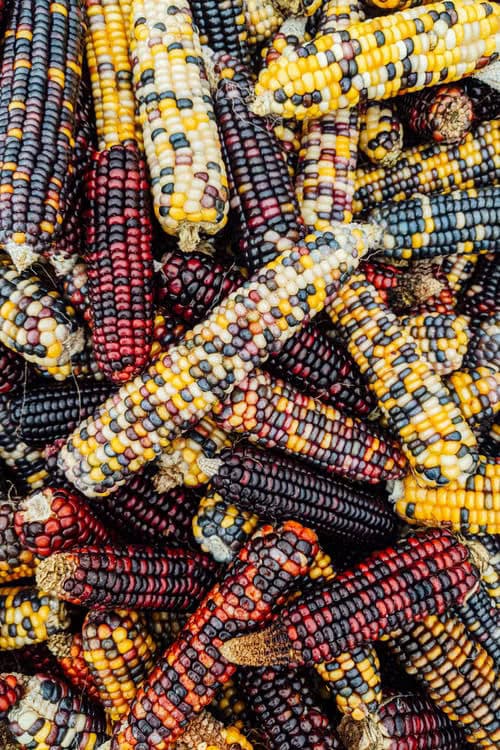
Today, maize is the most widely grown grain crop on the planet, serving as a critical pillar of global food security, livestock feed, and industrial biofuel production. However, modern agriculture's reliance on highly uniform, monocropped hybrid maize has created severe vulnerabilities to pests and climate volatility. Agronomists and geneticists are increasingly turning back to the vast genetic reservoirs of heirloom Mesoamerican landraces, searching for the drought-resistant, pest-tolerant traits necessary to secure the future of the crop in the Anthropocene.