Variable Rate Technology (VRT)
A cornerstone of precision agriculture utilizing GPS, sensors, and algorithmic data to apply water, seeds, and agrochemicals precisely where and when they are needed across a variable landscape.
Historical Overview
The End of Broadcast Agriculture
For the entire 20th century, mechanized agriculture operated on a "broadcast" or uniform-rate paradigm. If a farmer determined that a 1,000-acre field needed nitrogen, heavy machinery would apply the exact same volume of synthetic fertilizer to every square meter of that field. This approach ignored the profound biological reality that soil composition, moisture retention, and nutrient depletion vary drastically across a single landscape. The result was massive economic waste and catastrophic ecological runoff, leading to oceanic dead zones and contaminated aquifers.
How VRT Works
Variable Rate Technology (VRT) shifts agronomy from field-level management to square-meter-level precision. The system relies on a seamless integration of hardware and software:
- Data Acquisition (Prescription Maps): Agronomists first map the field using drone multispectral imagery, satellite NDVI (Normalized Difference Vegetation Index) scans, and electrical conductivity soil sensors. This data is fed into an algorithmic model that generates a high-resolution "prescription map," dictating exactly what inputs are needed at specific GPS coordinates.
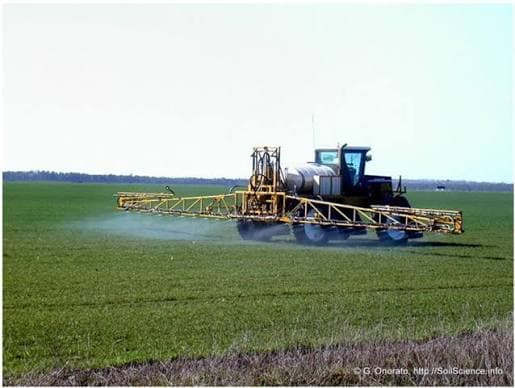
- Automated Application: A tractor equipped with a GPS receiver and an onboard computer reads the prescription map in real-time as it moves across the field. The computer continuously communicates with the sprayer nozzles or seed drill, adjusting the output rate—increasing fertilizer in nutrient-poor zones, reducing water in natural depressions, or varying seed density based on the soil's carrying capacity—all within milliseconds.
Economic and Ecological Alignment
VRT represents one of the rare technological advancements where pure economic efficiency perfectly aligns with ecological restoration. By only applying agrochemicals where the plants can actively biologically metabolize them, VRT drastically reduces the total volume of inputs a farmer must purchase. Simultaneously, because excess chemicals are no longer being dumped onto saturated zones, nitrate leaching into the local watershed is almost entirely eliminated, making VRT a critical tool for building climate-resilient, sustainable food systems in the 21st century.