Basin Irrigation of Ancient Egypt
A macro-scale hydrological system designed to capture and hold the annual floodwaters of the Nile, utilizing natural silt deposition to sustain agriculture for over 5,000 years without soil exhaustion.
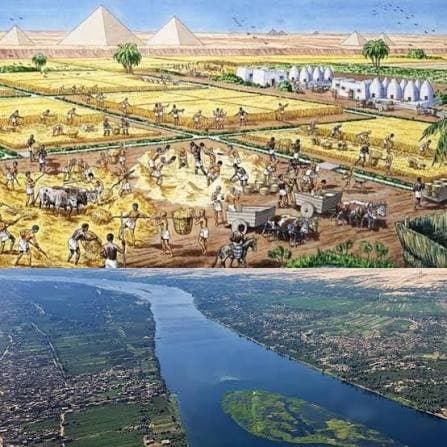
Historical Overview
The Gift of Hapi: Harnessing the Inundation
While ancient Mesopotamian agriculture required backbreaking labor to pump water out of erratic, unpredictable rivers, the agronomy of Ancient Egypt was built upon a remarkably stable and predictable natural phenomenon: the annual inundation of the Nile River (personified as the god Hapi). Triggered by monsoon rains in the Ethiopian highlands, the Nile would slowly rise every late summer, cresting over its banks and flooding the valley floor.
The Mechanics of the Basin System
To maximize this natural resource, Egyptian engineers constructed a vast, decentralized network of earthen banks, running both parallel and perpendicular to the river. This grid divided the floodplain into massive "basins," ranging in size from 1,000 to over 40,000 acres.
When the river rose, sluice gates were opened, allowing the water to rush into the basins. The water was deliberately held completely stagnant in these basins for approximately 40 to 60 days. This retention served two vital purposes:
- Deep Soil Saturation: The standing water thoroughly soaked the heavy clay soils, ensuring enough residual moisture remained locked in the earth to sustain a crop through the scorching, rainless winter and spring.
- Silt Deposition: As the turbulent river water sat still, the heavy load of volcanic suspended solids and rich organic matter it carried from the African interior settled onto the basin floor. When the water was drained back into the receding river in October, it left behind a fresh, millimeter-thick layer of highly fertile black silt.
Ecological Superiority over Mesopotamia
The basin irrigation system is widely considered one of the most perfectly balanced and ecologically sustainable agricultural frameworks in human history. In Mesopotamia, continuous year-round irrigation under the hot sun caused rapid evaporation, leading to severe soil salinization that eventually destroyed the region's fertility. Because the Egyptian basin system naturally flushed the soil once a year and allowed it to dry and crack deeply in the summer, salinization was entirely prevented, allowing the exact same plots of land to produce massive surpluses of wheat and barley continuously for five millennia.